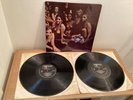
JIMI HENDRIX ELECTRIC LADYLAND,1968 UK TRACK 613008/09
£
470
$
623


Favourite Auctions
To save auctions to your favourites, please login
If you don't have an account, please register
Description
RARE JIMI HENDRIX EXPERIENCE ELECTRIC LADYLAND LP UK ORIGINAL
Rare First Pressing with Blue Letters & Large Photos
Original 1968 FIRST ISSUE U.K. stereo pressing released on the Track Record label 613008 / 613009.
DESCRIPTION;
VERY RARE and very hard to find A first issue pressing of Electric Ladyland in this condition
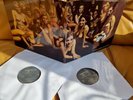
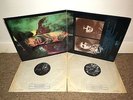
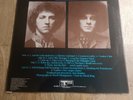
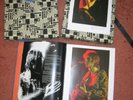
Contains the BLUE LETTERING on the inside of the gatefold sleeve together with the larger photos of Mitch Mitchell and Noel Redding.
Note! (Later Track label pressings had the text in white with smaller photos).
(Grading’s below used from The Record Collector Magazine's Grading Guide, see at the bottom of the listing)
PLEASE CLICK HERE TO SEE LOTS OF DETAILED PHOTOS WHICH MOST ARE NOT ALLOWED ON THE EBAY SITE BECAUSE OF THE NUDITY
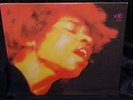
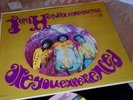
This 3rd and final album by "The Jimi Hendrix Experience" was first released in September 1968 in the USA on 'Reprise Records' and October 1968 on 'Track Record' in the UK. The US issue, mastered by Reprise, has the Warner7Arts/Reprise roundel logo & 'Stereo' on the cover. The 'red/yellow' cover image of Hendrix
is a photo by Karl Ferris, subsequently adopted as an 'official cover image' since the acquisition of the catalogue by the Hendrix Family Trust. The logo was removed on later releases and the label went through visual changes during the emergence of 'Warner Bros.' and the Kinney National deals. The early US mastering does not capture the same 'hi-fidelity' qualities found on the UK issue. When 'remastering' is referred to on any subsequent issues the source is worth noting.
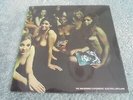
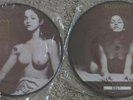
The UK issue was mastered, produced & distributed for Track by Polydor, who subsequently branded the UK release after the demise of Track. Polydor branding was also used for roll-outs in the European market. Polydor, of course, having its roots in Germany. Buyers and sellers should both be aware of the key differences which help identify early Track Record releases. All early UK (and some Euro) issues are auto-coupled, as Disc 1;Sides A/D & Disc 2;Sides B/C. On a few later vinyl & CDs this has resulted in the track order being wrongly presented, with A/D as A/B & B/C as C/D. (The quickest check for correct track-order is "Little Miss Strange" follows "Voodoo Chile"). The next check is the gatefold cover, 'hi-gloss' laminated inside & out, designed by David King. It is a one-piece front/back spread, with 'naked ladies' photo by David Montgomery, glued to a one-piece left/right inside spread. The lamination on Track issues is poor, leaving exposed print on the two opening edges and around all four edges of the inside spread. Bubbling, creasing & de-lamination also occurred and 'perfection' is an unlikely find - until the improved process on Polydor issues. The next and most important factor of the Track covers is the inside spread and its relationship to vinyl content.
First press Track issues have all-blue text in two versions. The Hendrix picture is either on the right when opened (most common), or on the left (rare). This is a result of the spread being rotated in production. This can go unnoticed, as the spread is viewed vertically for it to be read, rather than horizontally. First press Track issues can also have the same layout, Hendrix on right, but with a blue track list & white logo as a third version. On all three versions the 2 sepia images of Redding & Mitchell, by Donald Silverstein, are large, with the print credit grouped to the left. There is then a fourth Track version, with all white text and the print credit centered. On this the 2 sepia images are significantly reduced in size, surrounded by the black background. A fifth version is the same layout as the fourth, but the Track logo is replaced by the Polydor logo. This is the most common release. The first 3 cover versions have 'greener' flesh tones on the cover girls than the 'warmer' later releases. These 3, with blue text content, were all effected prior to and during release. The fourth version after release date. The vinyl within has the significant 'hand-etched' changes to the wax matrix stamped ID that denotes first press. Disc 1 label is cat#613008, suffixed by A&B on sides marked A&D. Disc 2 label is cat#613009, suffixed by A&B on sides marked B&C. These suffixed cats are in parenthesis, inverted above the unsuffixed cat#. This cataloguing decision to auto-couple resulted in the wax changes to the '8' & '9' and 'sides' order. The 'hi-dynamic' of the mix was found to cause needles to 'jump' on less expensive phonographs of the time. In simple terms, Polydor repressed a 'lower mix' for the Track releases, followed by a third press on Track and then into the Polydor issues. There is a subtle label change between 1st & 2nd press, both having inverted catalogue data. 'Side A' 1st press has "Electric Ladyland" overlapping the centre indent and there is a small gap between the words "Jimi Hendrix" & "A.Schroeder Music". 'Side A' 2nd press has "Electric Ladyland" clear of the indent. The unit of text has moved down, so that "Jimi Hendrix" is closer to "A.Schroeder Music"- which is now closer to the "Made in Britain" at the foot of the label. The final assurance of the earliest pressing is the white poly-lined inner sleeves with punched label holes, bearing the blue imprint "Made in England 108" in the bottom-right corner. The later pressings in the later covers do not have inverted cat# over the 613008 or 613009 and Track labels also have "Two Record Set (Set. No. 2657-001)". Later liners are printed "Made in England 1170".Radical at the time, the UK cover caused controversy, with some outlets refusing to display it. Often, it was sold 'brown bagged', like Lennon's "Two Virgins" album of the same period. Hendrix wanted all issues to have the David Sygall & Linda Eastman (McCartney) images used for the cover. These photos, of the band & children posed on an Alice in Wonderland sculpture in Central Park, can be seen on the US inner and in the MCA CD booklet. Both Reprise and Track ignored the designs he sketched out. Initial work on tracks was begun by the band in January 1968, with manager and producer Chas Chandler at Olympic Studios, London, the 'residency' of engineering brothers Glyn & Andy Johns and staff engineer Eddie Kramer. It was here that Hendrix began to explore the production of his 'progressive' sound and the feasibility of creating tracks that went beyond the current concept of 'pop singles material'. He began to experiment with repeated takes and effects, with Chandler producing and Kramer engineering. Mixes from these sessions then became a new starting point for Hendrix when Chandler and the band entered Gary Kellgren & Chris Stone's newly-opened Record Plant Studios in New York in April & then June 1968 after a period of touring. During the months of recording Hendrix became somewhat fixated in achieving on tape exactly what was in his head, overdubbing, erasing and moving from 4 to 12 & 16-track layering - plus inviting in musicians he had been jamming with at clubs like The Scene. This drove the commercially-minded Chandler to financial distraction. He quit early in the proceedings, selling his shares and leaving Hendrix to complete production. Michael Jeffery became the manager. Kramer, the most prevalent engineer in the recordings, had been called in from the UK and joined forces with Kellgren. Hendrix also dubbed many of the bass parts in Redding's absence. This and many other factors no doubt prevailed in this finalé album of the "Jimi Hendrix Experience".
Record: Audio -
Thankfully, it plays NEAR MINT with fantastic stereo and clarity, it really sounds incredible with no hisses, pops, crackle or distortion to speak of, all I can say is I have played this all the way through and can only remember a slightest minimal amount of static in the run offs and once or twice in between tracks or the very quiet sections but can assure you it’s not very much at all, most of which you will get from virtually any record, new or old. Point to note this record has never been cleaned by me as I don’t have the means.
It really does play with a deep bass and clarity you can only get from UK 1st Press vinyl, it’s not far off a CD sound.
It’s a fantastic record of its age and rarity.
Must grade overall audibly as Excellent + NM
Record: Visual -
Spectacular Original 1968 UK 1st Press Vinyl, Nice bright and shiny as if they were just pressed.
Fantastic jet black mirror like surfaces, they look Brilliant with no deep scratches, or any deep scuffs.
The only blemishes are just a few totally non-sounding mild cosmetic paper scuffs, and a few non sounding light marks.
None of these light blemishes interfere with play at all.
for a record of this age and rarity I must grade it at;
Very good to Excellent
(Slight downgrade because of some light marks, again these do not have any effect on the sound)
Sleeve:
Original UK fully laminated 1968 gatefold sleeve
E.J Day BLUE TEXT sleeve complete with original inners. Impossible to find this sleeve in anything approaching a good condition - most are spent, torn and worn due to age and the lifestyles of the buyers of this particular LP.
This one HOWEVER is NOT, and looks FANTASTIC, especially considering the nature of these fragile sleeves, no tears, no dulling, no bad marks at all, no seam splits, and still strong and solid after all these years. Only has a few minor signs of ageing such as just a very small amount of light creases and corner rub (as with most) all of which you can clearly see in the large amount of photos I have taken so you can see it from every angle.
This is a BRILLIANT sleeve, and a TRUE rarity to find one as awesome as this - most have been virtually destroyed or are just about being held together, but not this one. The colours are vibrant and the iconic artwork looks absolutely magnificent.
the spine remains strong and solid. The only blemish being that some of the laminate on the spine is fraying but only minor, even with this in mind;
The legendary "nude" laminated gatefold sleeve is overall in; Excellent condition.
THIS IS A VERY NICE COLLECTABLE SLEEVE
Inner Poly Lined Sleeves:
The inner poly lined sleeve, sides A&D original poly lined with (made in england 108) , B&C poly lined with the same (plastic bags can be dangerous) looks identical but has made in england with no number. they both have the same british patent number 800513 973939. A&D has clear tape on sides about 2inches, and A&D has name on back down the side, B&C has name descripion at top, both on the reverse side, otherwise as you can see in the pictures they are in very good condition.
Labels:
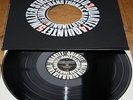
Original first pressing Black Track labels such as this one have a slightly different texture to the paper, but the single most important difference between the first and later Track and Polydor pressings is the catalogue number on the label.
On the left side of the centre hole, the catalogue number is repeated above the bold silver print in small printing, inverted in a bracket, i.e. upside down. In other words it can be read regardless of which way up you see the record. Those bracketed catalogue numbers end with a capital "A" or "B" per side on both record labels and this is only found on the very first pressing and Electric Ladyland" overlapping the centre indent and there is a small gap between the words "Jimi Hendrix" & "A.Schroeder Music"..
All sides have minimal signs of age, just has a few light spindle trails from general use.
The only blemish is on label c where someone has written their initials, this is very very faint and you can only see it under a bright light, see photo; it really is so faint you will not see it if you don’t know it’s there.
Grade Label a; Excellent
Label d; Excellent
Label b; Excellent
Label c; Very Good
Matrix numbers are;
Side A, 61300##8 A//1
Side D, 61300#8 B//1
Side B, 61300#9A# // 1
Side C, 61300#9# B#//1
SO TO RECAP;
VINYL EXCELLENT ALL SIDES ARE VERY GLOSSY, NO GREYING OF THE VINYL FROM OVER USE AND ONLY VERY LIGHT WISPS FROM THE INNER SLEEVES A FEW LIGHT MARKS THAT DO NOT DETRACT FROM THE VISUAL OR SOUND QUALITY. PLAYS WITH NO POPS OR JUMPS VERY NICE THE LABELS ARE EXCELLENT JUST THE ODD LIGHT SPINDLE TRACE AND THE POLY LINED INNERS ARE EXCELLENT. THE MATRIX NUMBERS IN THE VINYL RUN OFF ARE ALL THE CORRECT ONES FOR THIS PRESSING.
SO OVERALL AN EXCELLENT EXAMPLE, BECOMING RARE IN DECENT CONDITION AND MORE COLLECTABLE THAN EVER.
Note! There are some surface marks but they do not in any way detract from listening.
This is a 43 year old record, Must grade overall as an; Excellent example
I have been as honest as I can with the information before, but if there is something I have missed or if there are any other questions please feel free to email me, happy bidding. Don’t forget to look at all the photos.
PLEASE LOOK AT MY 100% FEEDBACK
PLEASE CONTACT ME IF YOUR NOT SURE ABOUT POSTAGE COSTS These include Insurance(of upto £500) UK Europe Rest Of World Royal Mail 1st CLASS £7.50 International Signed For Airmail £10.50 £12.50
PAYMENT;
Payment must be made within 48HRS of the auction ending. If you cannot comply with these terms then please do not place a bid.
Record Collector Magazine's Grading Guide
MINT:
The record itself is in brand new condition with no surface marks
or deterioration in sound quality.
The cover and any extra items are in perfect condition.
Records advertised as sealed or un-played should be mint.
EXCELLENT:
The record shows some signs of having been played,
but there is very little lessening in sound quality.
The cover and packaging might have slight wear and/or creasing.
VERY GOOD:
The record has obviously been played many times,
but displays no major deterioration in sound quality,
despite noticeable surface marks and the occasional light scratch.
Normal wear and tear on the cover or extra items,
without any major defects, is acceptable.
GOOD:
The record has been played so much
that the sound quality has noticeably deteriorated,
perhaps with some distortion and mild scratches.
The cover and contents suffer from folding,
scuffing of edges, spine splits, discoloration, etc.
FAIR:
The record is still just playable but it has not been cared for properly
and displays considerable surface noise; it may even jump.
The cover and contents will be torn, stained and/or defaced.
price rating








![Paul McCartney And Wings - At The Speed Of Sound [2LP] (180 Gram gatefold down](https://www.popsike.org/php/thumbnail.php?url=https://www.popsike.pics/pix/20200624/114273058901.jpg)